Understanding Headaches in Children
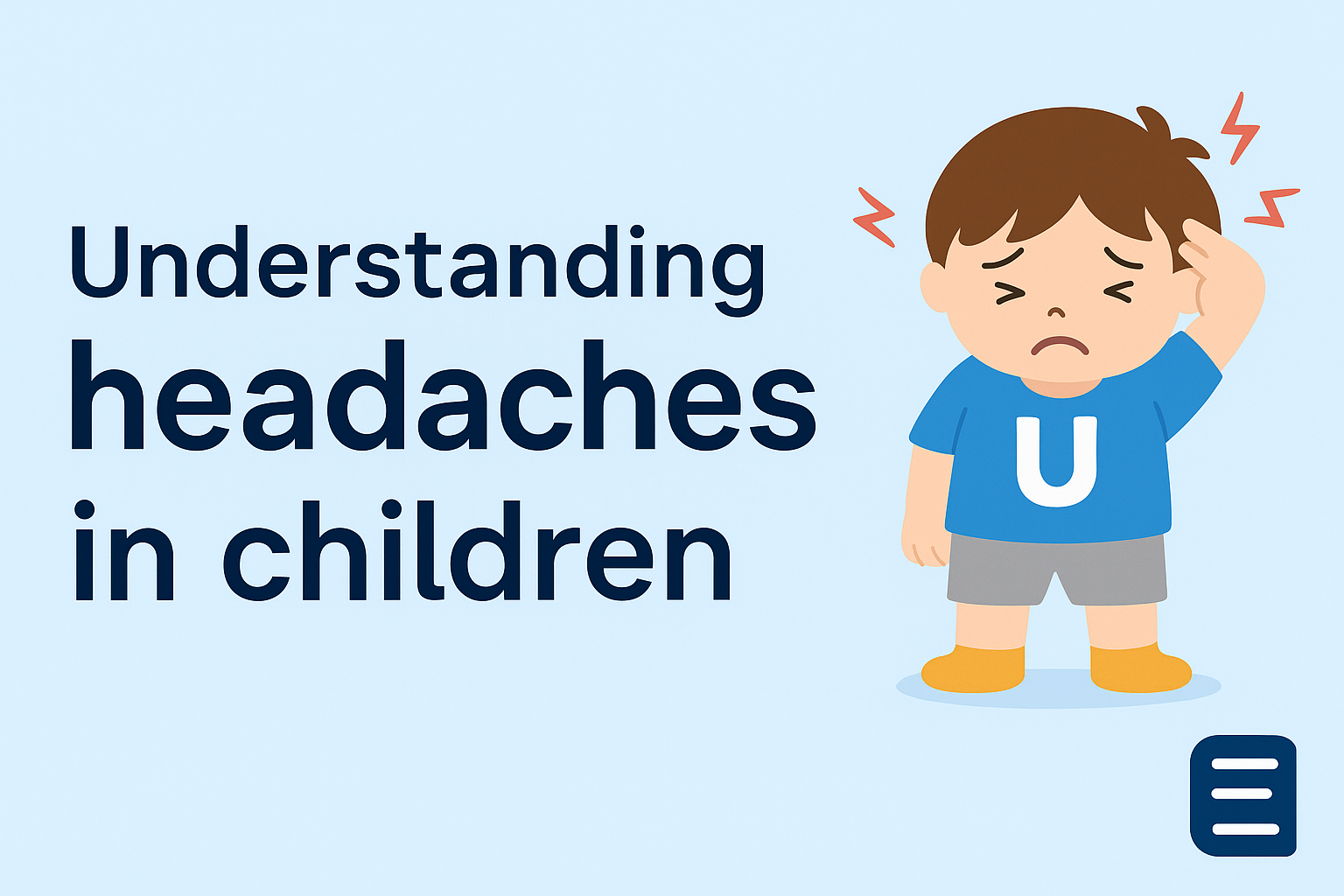
Headaches are surprisingly common in children and adolescents, and most parents worry when their child complains of frequent head pain. To better understand these issues, it helps to know the types of headaches, what causes them, and how they can be managed effectively.
There are two main types of headaches: primary and secondary.
- Primary headaches include tension-type headaches and migraines, which are the most common in children.
- Secondary headaches occur due to another condition such as an infection, injury, or inflammation. These headaches usually improve once the underlying condition is treated.
Symptoms of Headaches in Children
Tension Headaches
Tension headaches are the most frequently seen primary headache type among children. They typically:
- Start gradually and may last from 30 minutes to a week
- Cause dull, squeezing pain on both sides of the head
- Range from mild to moderate in intensity
- Do not get worse with physical activity
- Often produce tension or tightness in the back part of the head or neck
Migraines
Migraines can be more intense and disabling. Common features include:
- Pain lasting anywhere from 1 hour to 48 hours
- Throbbing pain, usually on one side of the head
- Moderate to severe intensity
- Pain worsening with activity
- Possible nausea or vomiting
- Sensitivity to light and sound
Diagnosis and Treatment
If your child experiences recurring headaches, a pediatrician or neurologist may conduct a physical and neurological examination. They will also review:
- Your child’s lifestyle habits
- Family history of headaches
- The pattern of the headaches (location, duration, frequency, triggers, etc.)
In more complicated cases, brain imaging tests may be recommended.
Common Triggers
Primary headaches in children may be caused by:
- Dehydration
- Hunger or poor nutrition
- Sleep deprivation
- Stress or emotional factors
- Caffeine
- Hormonal changes
Lifestyle changes often help reduce headache frequency. These may include improving sleep patterns, eating timely meals, staying hydrated, increasing physical activity, or learning stress-reduction techniques such as mindfulness or yoga.
If headaches interfere with regular activities or become frequent and severe, you may be referred to a pediatric neurologist for further evaluation and care.
By the age of 18, more than 90% of children and adolescents will experience at least one headache.
Healthy Lifestyle Habits for Prevention
A child’s overall well-being depends heavily on proper sleep, nutrition, hydration, and physical activity. To reduce the risk of headaches:
- Ensure restful sleep. Children should ideally sleep 8–10 hours every night
- Encourage regular physical activity
- Offer small, frequent meals
- Promote drinking water throughout the day
Healthy lifestyle choices can significantly reduce the frequency and intensity of headaches and improve a child’s quality of life.